CABLE LABEL MATERIALS
A wrap, a flag,
or a sleeve?
Start with the cable and where its identifier needs to be read. LabelCraft includes 99 M21 cartridge profiles; the material, dimensions, and application instructions still matter.
The application photographs below are illustrative examples showing possible label placement. They are not physical print samples or proof of a particular cartridge’s performance.
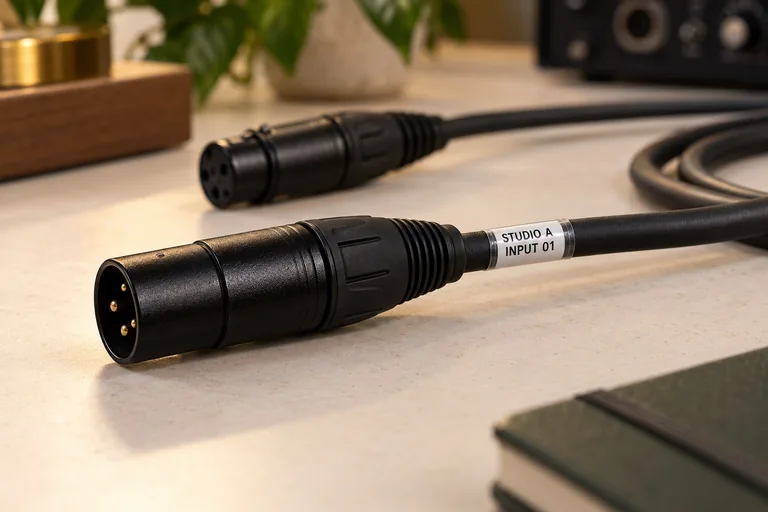
Self-laminating cable wraps
B-427 profiles distinguish the white printable strip from the clear protective tail. Choose a size appropriate for the cable and wrap the clear portion over the printed area according to the material instructions. An existing connector can make a wrap more practical than a sleeve.
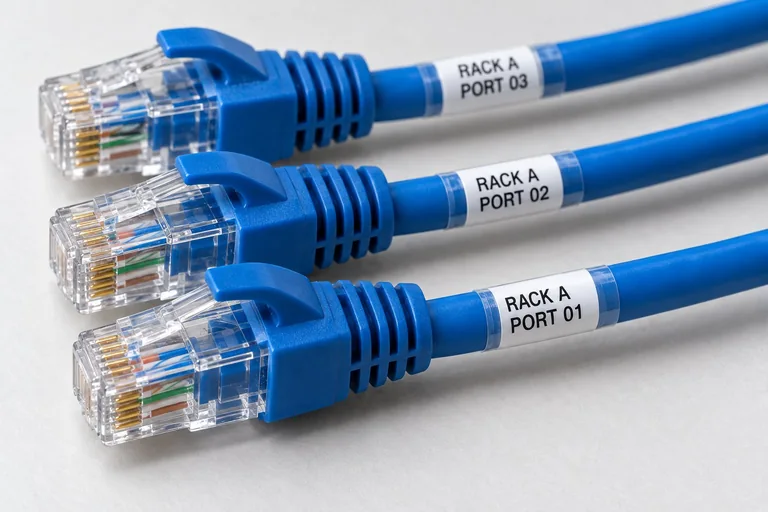
Consistent IDs for patch cables
Use one naming convention at both ends and a numbered plan when labeling a series. Keep the printed text readable for the cable’s diameter and the available space. Test placement before preparing a larger batch.
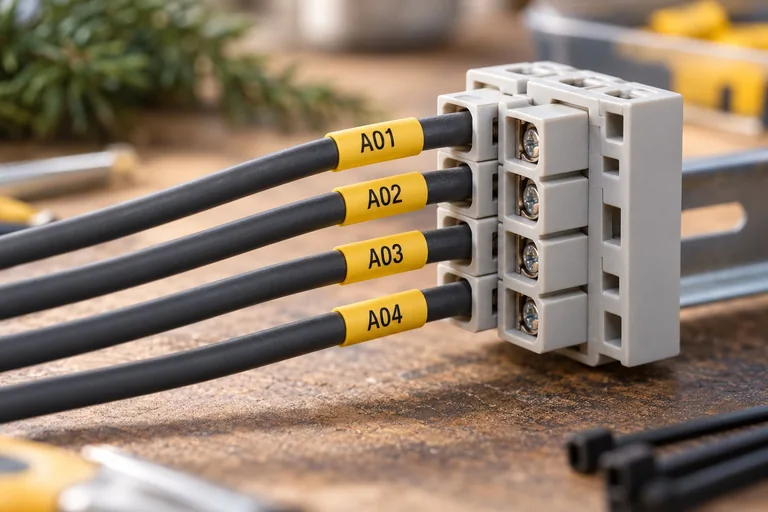
Heat-shrink wire identification
B-342 sleeve profiles are intended for tubing that fits around an appropriate wire size. Slide the sleeve on before termination and shrink it according to the manufacturer’s instructions. Check diameter, material suitability, and application requirements first.
What about a cable flag?
Flexible nylon cloth stock such as B-499 can form a readable flag or conform around a cable. Choose a design and label arrangement that leaves the identifier readable when applied; the generated wrap photos do not demonstrate a dedicated flag-layout tool.
Check the exact cartridge
Search LabelCraft by SKU, material, or size and check that the selected profile matches the cartridge loaded in the connected M211. Printable height and total material height can differ, especially on self-laminating wraps. Design length and final cut length can also differ because of printer margins.
Material and cable fit should follow Brady’s M21 material guide and the specific cartridge instructions. Printer and materials are sold separately.